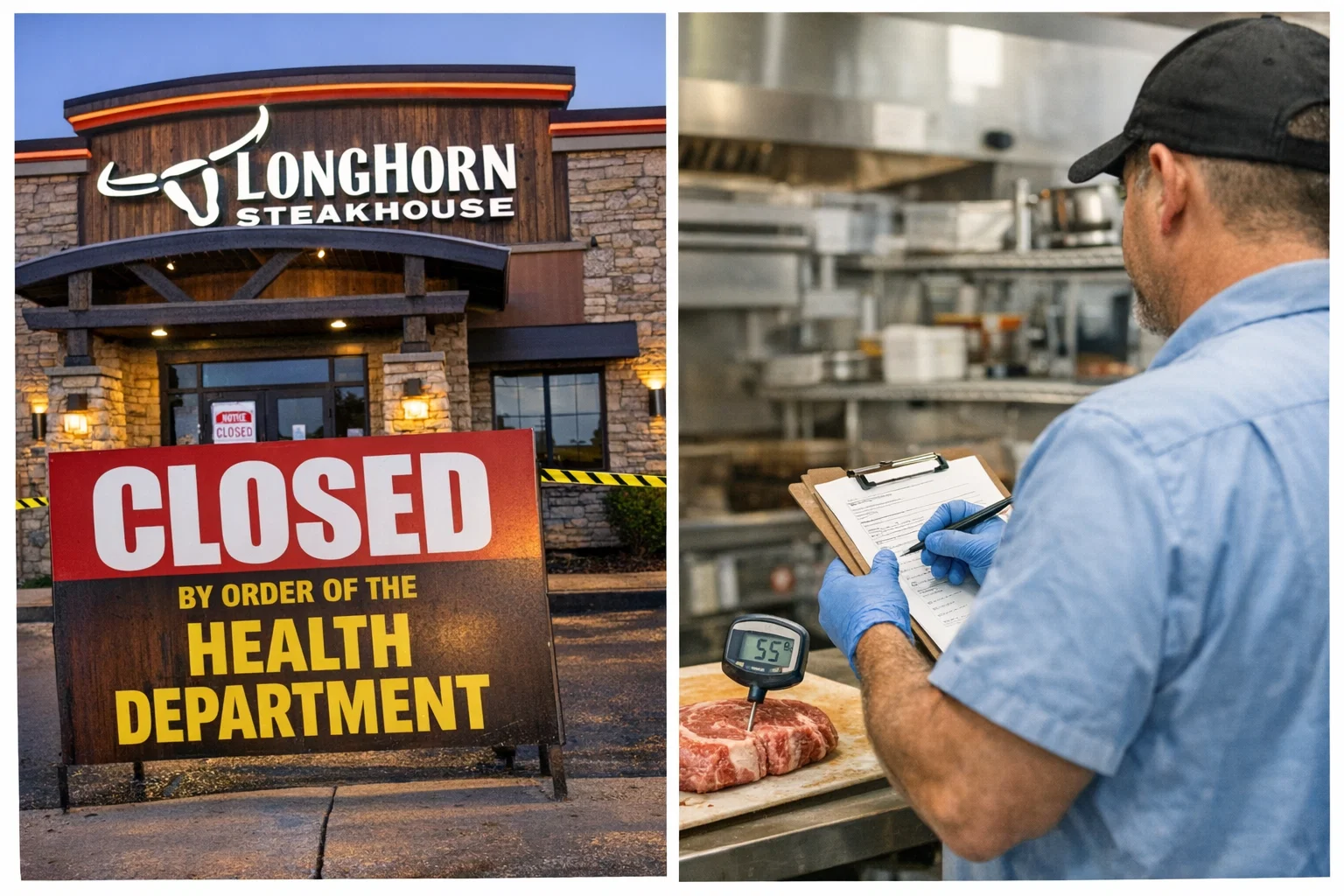
When news breaks that longhorn steakhouse closes after inspection, it often sparks immediate concern, speculation, and a wave of social media reactions. For many diners, the headline alone can feel alarming, especially when a familiar national brand is involved. Yet restaurant inspections, temporary closures, and corrective actions are far more common—and far more nuanced—than most people realize.
This in-depth guide unpacks exactly what it means when a LongHorn Steakhouse location shuts its doors following an inspection. We’ll explore how health inspections work, why closures happen, how brands respond, and what customers can realistically expect next. The goal is clarity, not panic—grounded in facts, industry context, and practical insight.
Understanding What “LongHorn Steakhouse Closes After Inspection” Really Means
When a headline states that longhorn steakhouse closes after inspection, it typically refers to a single restaurant location, not the entire brand. National chains operate hundreds of independently inspected locations, each subject to local health department oversight.
In most cases, the closure is temporary and precautionary. Inspectors identify violations that must be corrected before the restaurant can safely reopen, and the shutdown ensures those fixes happen without risk to the public.
How Restaurant Health Inspections Actually Work
Restaurant inspections are conducted by local or county health authorities using standardized food safety criteria. Inspectors evaluate food handling, storage temperatures, employee hygiene, equipment sanitation, and pest control.
A closure usually occurs only when violations are considered serious or repeated. These are often correctable issues, not evidence of long-term neglect or systemic failure.
Why a LongHorn Steakhouse Location Might Be Closed After an Inspection
When longhorn steakhouse closes after inspection, the reasons often involve food temperature control, sanitation lapses, or equipment issues. For example, a malfunctioning refrigeration unit can trigger an automatic shutdown.
Importantly, many violations are operational rather than intentional. Restaurants are complex environments, and even well-managed kitchens can encounter temporary compliance problems.
Temporary Closure Versus Permanent Shutdown
A key misconception is that inspection-related closures signal permanent failure. In reality, most closures last from a few hours to several days while corrections are made.
Permanent shutdowns usually stem from broader financial or operational challenges, not routine health inspections. The phrase longhorn steakhouse closes after inspection almost always points to a short-term interruption.
The Role of Local Health Departments
Health departments are responsible for protecting public health, not punishing businesses. Their authority allows them to require closures when necessary, but also to guide restaurants through compliance.
When inspectors order a shutdown, they typically provide a clear checklist of corrective actions. Once completed, a follow-up inspection determines whether reopening is approved.
How National Chains Like LongHorn Steakhouse Respond
Large restaurant brands such as LongHorn Steakhouse have established protocols for inspection issues. Corporate teams often support local managers with resources, training, and rapid-response maintenance.
This structure helps ensure that when longhorn steakhouse closes after inspection, the response is swift, documented, and aligned with brand-wide food safety standards.
Food Safety Standards in Chain Restaurants
Chain restaurants operate under layered oversight. In addition to local inspections, they follow internal audits, supplier standards, and corporate food safety programs.
These internal systems mean that a closure is not ignored or minimized. Instead, it becomes part of a documented improvement process designed to prevent recurrence.
Common Violations That Trigger Closures
Not all violations carry the same weight. Issues that commonly lead to closures include improper hot or cold holding temperatures, cross-contamination risks, and unsanitary food-contact surfaces.
While these sound serious, they are often resolved quickly through equipment repair, deep cleaning, and staff retraining.
What Happens Inside the Restaurant During a Closure
Once a closure order is issued, food preparation stops immediately. Perishable items may be discarded, equipment is sanitized, and maintenance teams address mechanical failures.
Management documents every step. When longhorn steakhouse closes after inspection, reopening is contingent on proving that all risks have been eliminated.
Reinspection and Reopening Procedures
Reopening requires a successful reinspection by the same health authority. Inspectors verify that cited violations have been corrected and that systems are in place to maintain compliance.
Only after approval can the restaurant resume service. This process reinforces accountability and public trust.
How Often Do Restaurant Closures Actually Happen?
Closures are more common than most diners realize, affecting restaurants of all sizes and price points. The majority are short-lived and resolved without further incident.
Seeing longhorn steakhouse closes after inspection in the news reflects transparency, not exceptional failure. Many smaller closures never make headlines at all.
Media Coverage and Public Perception
Headlines tend to emphasize the closure rather than the corrective outcome. This can distort public perception, making routine safety enforcement seem scandalous.
In reality, inspections working as intended should reassure customers that oversight systems are functioning.
The Impact on Customer Trust
Customer trust depends on how openly a restaurant addresses issues. Clear communication, visible cleanliness, and prompt reopening help rebuild confidence.
For established brands, a single inspection-related closure rarely causes long-term reputational damage.
Employee Training and Accountability
Inspections often lead to renewed staff training on food safety protocols. This includes handwashing, glove use, temperature logging, and cleaning schedules.
When longhorn steakhouse closes after inspection, employees are typically retrained before service resumes, strengthening overall compliance.
Corporate Oversight and Ownership Structure
LongHorn Steakhouse operates under Darden Restaurants, which oversees multiple national dining brands. Corporate oversight adds another layer of quality control.
This structure ensures consistent standards and rapid response when individual locations encounter issues.
Why One Location’s Closure Doesn’t Reflect the Entire Brand
Each restaurant operates independently within a broader framework. A closure in one city does not indicate problems across the chain.
Understanding this distinction is essential when interpreting reports that longhorn steakhouse closes after inspection.
Customer Rights and Health Transparency
Inspection reports are typically public records. Customers have the right to review them and understand what violations occurred.
Transparency empowers diners to make informed choices rather than relying solely on headlines.
Comparing Restaurant Inspection Outcomes
| Outcome Type | Typical Cause | Duration | Customer Risk |
| Pass with Notes | Minor issues | None | Minimal |
| Conditional Pass | Correctable violations | Same day | Low |
| Temporary Closure | Critical violations | Days | Prevented by closure |
| Permanent Closure | Financial or legal issues | Indefinite | Variable |
This table shows that temporary closures are preventive, not reactive.
Misconceptions About Foodborne Illness
A common myth is that inspection closures follow outbreaks. In most cases, closures are preventative measures taken before any illness occurs.
This proactive approach is a cornerstone of modern public health.
What Customers Should Do When They See a Closure Notice
If you encounter a closed restaurant, respect the notice and understand it as part of safety enforcement. Avoid speculation or online rumors.
When the restaurant reopens, it has met required standards to serve food safely.
The Role of Technology in Modern Inspections
Digital temperature logs, automated alerts, and centralized reporting help restaurants catch issues early.
These tools reduce the likelihood that longhorn steakhouse closes after inspection will occur, though they cannot eliminate risk entirely.
How Inspection Standards Have Evolved
Over the past two decades, inspection criteria have become more stringent. What once resulted in a warning may now trigger a closure.
This evolution reflects improved understanding of food safety, not declining restaurant quality.
Legal and Regulatory Context
Health departments operate under state and local food codes. These regulations give inspectors authority to enforce closures when necessary.
Compliance is mandatory, regardless of brand size or reputation.
Financial Impact of Temporary Closures
Even short closures can be costly, involving lost sales, food disposal, and labor adjustments. For this reason, restaurants prioritize rapid compliance.
The financial incentive aligns with public safety goals.
Community Reactions and Local Context
Local communities often react strongly to closure news, especially when the restaurant is a popular gathering place.
Clear communication helps prevent misinformation and unnecessary concern.
Lessons for the Restaurant Industry
Each closure serves as a case study for the broader industry. Shared learnings improve standards across brands and locations.
In this way, a single longhorn steakhouse closes after inspection event can have positive ripple effects.
What Health Inspectors Want the Public to Know
Inspectors emphasize that closures are tools, not punishments. Their mission is to prevent harm, not to shame businesses.
One inspector summarized it plainly: “A closed restaurant is a safer outcome than an unsafe one that stays open.”
Transparency as a Competitive Advantage
Brands that openly address inspection issues often earn more trust over time. Silence or defensiveness tends to backfire.
Clear explanations and visible improvements reinforce credibility.
How Customers Can Stay Informed
Many health departments publish inspection scores online. Checking these reports provides context beyond headlines.
Informed diners are better equipped to assess real risk.
The Bigger Picture of Food Safety Culture
Food safety is an ongoing process, not a one-time achievement. Inspections, training, and audits form a continuous cycle.
When longhorn steakhouse closes after inspection, it reflects that cycle in action.
Why Panic Is Usually Unwarranted
Temporary closures indicate that safety systems are working. They prevent potential problems rather than reacting to them.
Understanding this reduces unnecessary fear and speculation.
Conclusion: What a Closure Really Signals
When you see news that longhorn steakhouse closes after inspection, the most important takeaway is context. These closures are typically temporary, localized, and precautionary.
Rather than signaling danger, they demonstrate enforcement, accountability, and a commitment to public health. For customers, that’s ultimately reassuring.
Frequently Asked Questions
Why does longhorn steakhouse close after inspection?
A location may close temporarily if inspectors identify critical violations that must be corrected immediately to protect public health.
Is food unsafe if longhorn steakhouse closes after inspection?
Closures are preventive. The restaurant is closed precisely to ensure food is not served until safety standards are met.
How long does it take to reopen after longhorn steakhouse closes after inspection?
Most reopen within days after correcting violations and passing a follow-up inspection.
Does a closure mean the entire chain has problems?
No. A single closure reflects one location’s compliance status, not the brand as a whole.
Should customers avoid a restaurant after longhorn steakhouse closes after inspection?
Once reopened, the restaurant has met inspection requirements and is considered safe to dine in.
You may also read
uncategorized bizwebgenius archives
