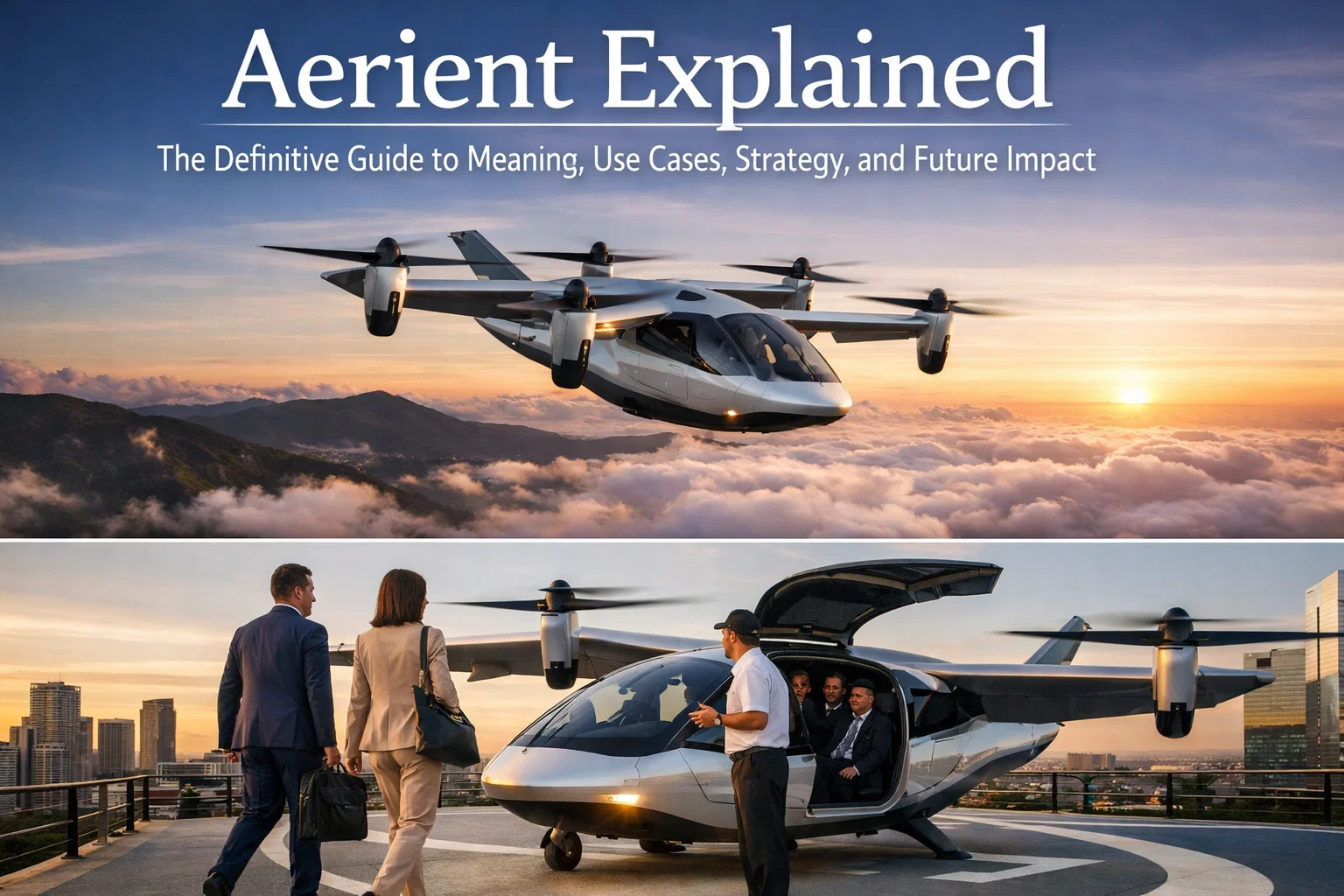
Aerient is a term that has steadily gained attention across technical, creative, and strategic disciplines, often appearing in conversations where precision, efficiency, and elevated perspective matter. While it may seem abstract at first glance, aerient represents a unifying concept that connects systems, ideas, and outcomes through clarity and intentional design.
This guide is written as a definitive, long-form resource for anyone seeking to understand aerient beyond surface-level definitions. By the end, you will not only know what aerient means, but also how it is applied, why it matters, and how it shapes modern thinking across industries.
Understanding the Core Meaning of Aerient
At its core, aerient refers to a state or quality of elevation, refinement, or clarity that allows ideas or systems to operate above unnecessary friction. The term often implies lightness, efficiency, and an intentional distancing from clutter or excess that slows progress.
In practical use, aerient is less about abstraction and more about outcome. When something is described as aerient, it signals that the underlying structure has been thoughtfully designed to prioritize flow, insight, and adaptability rather than density or rigidity.
The Conceptual Origins and Evolution of Aerient
The conceptual roots of aerient trace back to human efforts to simplify complexity while preserving meaning. Across disciplines, from design to engineering, professionals have sought language to describe systems that feel elevated without being detached.
Over time, aerient evolved into a shorthand for this balance. It became a way to articulate approaches that feel lighter, more breathable, and more responsive, particularly in environments overwhelmed by information and process.
Why Aerient Matters in Modern Contexts
Modern environments demand speed, clarity, and flexibility, making aerient principles increasingly valuable. Whether applied to digital platforms, workflows, or communication strategies, aerient helps reduce cognitive load while improving effectiveness.
This relevance is not accidental. As systems grow more complex, the ability to design aerient solutions becomes a competitive advantage, allowing organizations and individuals to move faster without sacrificing depth or quality.
Aerient as a Strategic Design Philosophy
As a design philosophy, aerient emphasizes intentional subtraction rather than constant addition. It encourages creators to ask what can be removed, streamlined, or elevated to improve overall function.
This mindset often leads to solutions that feel intuitive and resilient. By aligning structure with purpose, aerient design supports long-term scalability instead of short-term optimization.
Practical Applications of Aerient Thinking
In practice, aerient thinking shows up in clean interfaces, streamlined workflows, and clear messaging. These applications share a common goal: reducing friction so users or stakeholders can focus on what truly matters.
Beyond aesthetics, aerient also influences decision-making. Teams that adopt this approach tend to prioritize clarity, alignment, and sustainable momentum over complexity for its own sake.
Aerient in Digital and Technological Systems
Digital environments benefit significantly from aerient principles, especially where usability and performance intersect. Lightweight architectures, intuitive navigation, and responsive systems all reflect aerient thinking in action.
When technology feels aerient, users experience fewer barriers and greater confidence. This directly impacts engagement, trust, and long-term adoption in competitive digital ecosystems.
Aerient and Communication Clarity
Communication becomes aerient when messages are structured for understanding rather than volume. This means fewer words, stronger intent, and clearer outcomes for the audience.
In professional settings, aerient communication reduces misalignment and accelerates execution. It transforms conversations from exhaustive explanations into focused exchanges that move work forward.
Common Misconceptions About Aerient
One common misconception is that aerient means minimal or empty. In reality, aerient approaches can be rich and nuanced, provided that every element serves a clear purpose.
Another misunderstanding is that aerient sacrifices depth for simplicity. In practice, it often achieves the opposite by removing noise that obscures deeper insight and value.
Aerient Versus Traditional Heavy Systems
Traditional systems often prioritize completeness over clarity, resulting in dense structures that are difficult to adapt. Aerient approaches challenge this by focusing on essentials and adaptability.
The difference becomes clear over time. While heavy systems may feel robust initially, aerient systems tend to age better because they are easier to evolve and maintain.
Comparative Breakdown of Aerient Approaches
The following table illustrates how aerient-oriented structures compare to more conventional, heavier models across key dimensions.
| Dimension | Aerient-Oriented Approach | Traditional Heavy Approach |
| Structure | Lightweight and modular | Dense and tightly coupled |
| Adaptability | High and responsive | Slow to change |
| Cognitive Load | Low and intuitive | High and complex |
| Scalability | Designed for growth | Often rigid |
| User Experience | Clear and fluid | Functional but demanding |
This comparison highlights why aerient frameworks are increasingly favored in fast-moving environments where clarity and speed matter.
Aerient in Organizational Culture
Organizations that embrace aerient principles often foster cultures of trust and autonomy. Clear systems reduce the need for excessive oversight, empowering teams to act decisively.
Such cultures also attract talent. Professionals increasingly value environments that feel aerient, where work flows naturally and effort is focused on meaningful outcomes rather than bureaucracy.
A Thought Leader Perspective on Aerient
“A truly aerient system doesn’t feel impressive because it’s complex, but because it makes complexity disappear,” notes a widely shared industry observation. This perspective captures why the concept resonates so strongly with modern practitioners.
The quote underscores a key truth: aerient success is often invisible. When done well, it feels effortless, even though it requires deep expertise and discipline to achieve.
Measuring the Impact of Aerient Design
Measuring aerient impact involves both quantitative and qualitative indicators. Reduced errors, faster onboarding, and improved engagement all signal effective implementation.
Equally important is perception. When users or teams describe experiences as smooth, clear, or intuitive, those are strong indicators that aerient principles are at work.
Aerient and Long-Term Sustainability
Sustainability is an often-overlooked benefit of aerient systems. By reducing excess and focusing on essentials, these systems consume fewer resources over time.
This applies not only to physical or digital resources, but also to human energy. Aerient environments help prevent burnout by minimizing unnecessary effort and confusion.
Adopting Aerient Practices Step by Step
Adopting aerient practices begins with observation rather than action. Identifying friction points and redundancies provides a clear starting place.
From there, incremental refinement is key. Aerient transformation is rarely about sweeping change, but about consistent, thoughtful improvement aligned with purpose.
Aerient in Creative and Strategic Work
Creative teams often use aerient principles to maintain focus without stifling imagination. Clear constraints and streamlined processes can actually enhance creative output.
Strategically, aerient thinking helps leaders prioritize. By elevating what matters most, it becomes easier to allocate resources and attention effectively.
Challenges in Implementing Aerient Systems
Despite its benefits, implementing aerient systems can be challenging. Resistance often comes from habits formed around complexity and control.
Overcoming this requires education and patience. Demonstrating small wins helps stakeholders see that aerient approaches increase, rather than reduce, reliability and performance.
The Future Outlook for Aerient
Looking ahead, aerient concepts are likely to become even more relevant as environments grow more interconnected. The demand for clarity will only intensify.
As a result, aerient will continue evolving from a descriptive term into a foundational principle guiding how systems, teams, and ideas are built.
Conclusion: Why Aerient Is More Than a Trend
Aerient is not a fleeting buzzword, but a reflection of deeper shifts toward clarity, efficiency, and intentional design. Its value lies in how it reshapes experiences at every level, from individual tasks to complex systems.
By understanding and applying aerient principles thoughtfully, individuals and organizations can create environments that feel lighter, more effective, and better suited to long-term success.
Frequently Asked Questions About Aerient
What does aerient mean in practical terms?
In practical terms, aerient describes systems or ideas designed to reduce friction and elevate clarity, making them easier to use, understand, and adapt.
Is aerient the same as minimalism?
Aerient is related to minimalism but not identical. It focuses on purposeful clarity rather than simply reducing elements, ensuring depth and function remain intact.
How can businesses benefit from aerient strategies?
Businesses benefit from aerient strategies through improved efficiency, clearer communication, and systems that scale more smoothly over time.
Can aerient principles apply outside of design or technology?
Yes, aerient principles apply to communication, leadership, education, and any domain where clarity and flow improve outcomes.
Why is aerient becoming more important now?
Aerient is becoming more important as complexity increases, making clarity, adaptability, and reduced cognitive load essential for sustainable performance.
You may also read
