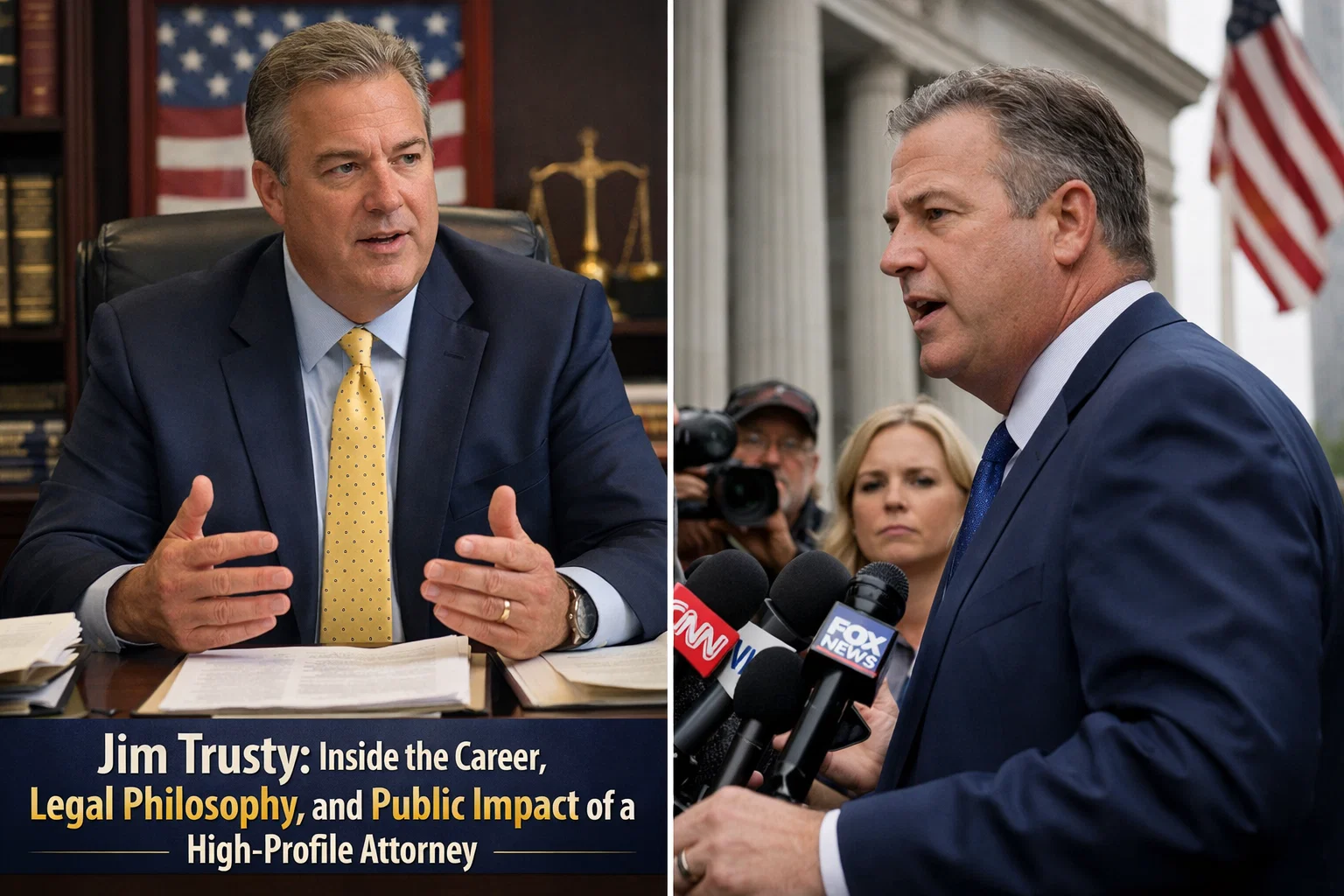
Few attorneys manage to operate at the intersection of law, media, and politics without becoming a public figure themselves. Jim Trusty is one of those rare names that resonates far beyond court filings, appealing equally to legal professionals, journalists, and curious members of the public. His career offers a window into how modern litigation unfolds when cases attract national attention.
This long-form guide examines the professional journey, legal philosophy, and broader impact of Jim Trusty with a clear, balanced, and expert lens. It is designed as a definitive resource for readers seeking context, clarity, and substance rather than surface-level commentary.
Early Legal Foundations and Education
The early legal development of Jim Trusty reflects a traditional pathway grounded in disciplined study and professional ambition. His education emphasized analytical reasoning, constitutional understanding, and the procedural rigor that later defined his courtroom presence.
Those formative years also shaped his comfort with high-pressure environments. Exposure to competitive academic settings helped build a mindset oriented toward strategic thinking rather than reactive advocacy.
Entry Into Federal Prosecution
Jim Trusty first gained prominence through his work as a federal prosecutor, a role that demands precision and restraint. Prosecutorial experience often sharpens an attorney’s understanding of evidence standards, investigative boundaries, and ethical obligations.
This period laid the groundwork for his later credibility. It also provided insight into how government institutions function internally, a perspective that would influence his subsequent private practice.
Transition to Private Legal Practice
Moving from prosecution to private defense marked a pivotal shift in Jim Trusty’s career. The transition required reframing legal instincts from proving cases to dismantling them, a skillset that not all prosecutors successfully master.
In private practice, he became known for handling complex matters with layered factual records. His approach leaned heavily on preparation and narrative coherence, particularly in cases subject to public scrutiny.
Legal Philosophy and Strategic Approach
At the core of Jim Trusty’s work is a philosophy centered on procedural fairness and evidentiary discipline. Rather than relying on theatrical advocacy, he tends to emphasize legal structure and statutory interpretation.
This approach resonates with courts but also influences public perception. It positions him as a lawyer focused on process integrity rather than headline-driven arguments.
High-Profile Representation and Public Attention
Some of the most discussed chapters of Jim Trusty’s career involve representing clients whose cases dominate national news cycles. These engagements place attorneys under dual pressure from courts and the court of public opinion.
Navigating such terrain requires careful messaging and legal restraint. His experience highlights how modern attorneys must manage reputational risk alongside traditional legal duties.
Media Presence and Commentary
Unlike many attorneys who avoid public platforms, Jim Trusty has occasionally engaged with media to clarify legal positions. This visibility brings both advantages and challenges in maintaining professional neutrality.
Media engagement can shape narratives, but it also requires disciplined communication. His measured tone often contrasts with more sensational commentary surrounding high-stakes litigation.
Role in Politically Charged Cases
Political cases amplify every legal move, and Jim Trusty’s involvement in such matters illustrates the complexity of advocacy in polarized environments. Legal arguments become symbols, and procedural motions are often misinterpreted as political statements.
His work in this arena underscores the importance of separating legal reasoning from ideological assumptions. It also reveals how attorneys can become proxies for broader societal debates.
Ethical Standards and Professional Responsibility
Professional ethics remain a central pillar of Jim Trusty’s reputation. Observers often note his adherence to formal rules of conduct even when public pressure suggests alternative strategies.
This commitment reinforces trust among peers and courts. It also demonstrates how ethical consistency can serve as a stabilizing force in volatile cases.
Litigation Style and Courtroom Demeanor
In the courtroom, Jim Trusty is often described as methodical rather than dramatic. His litigation style prioritizes clarity, directness, and respect for judicial process.
Such demeanor can be particularly effective in complex cases. Judges and juries alike tend to respond to arguments that are structured and accessible.
Understanding His Professional Impact
The broader impact of Jim Trusty extends beyond individual cases. His career illustrates how legal professionals shape public understanding of justice through both action and communication.
This influence is subtle but significant. It reflects how attorneys contribute to legal culture, not just legal outcomes.
Common Misconceptions About His Work
Public narratives sometimes oversimplify Jim Trusty’s role in controversial cases. A common misconception is that representation implies endorsement, a misunderstanding that often distorts professional ethics.
Clarifying this distinction is essential. Lawyers operate within a framework that values defense and due process as foundational principles, regardless of public sentiment.
Relationship With the Justice System
Having worked on both sides of the courtroom, Jim Trusty maintains a nuanced relationship with the justice system. He understands its strengths, limitations, and internal tensions.
This dual perspective enhances his advocacy. It allows him to anticipate institutional responses rather than merely reacting to them.
Influence on Younger Legal Professionals
Many early-career attorneys study figures like Jim Trusty to understand career adaptability. His path demonstrates that legal identities are not static but evolve with opportunity and conviction.
Mentorship and example play quiet roles here. His career offers lessons in resilience, reputation management, and strategic growth.
Table: Key Dimensions of His Legal Career
| Dimension | Description | Practical Significance |
| Early Career | Federal prosecution experience | Built credibility and procedural insight |
| Practice Shift | Transition to private defense | Expanded strategic versatility |
| Case Profile | High-visibility litigation | Required media and reputational management |
| Legal Style | Process-driven advocacy | Appeals to courts and institutional norms |
| Public Role | Selective media engagement | Shapes public understanding of cases |
Public Trust and Professional Reputation
Reputation in law is cumulative, built case by case over decades. Jim Trusty’s standing reflects consistency more than spectacle, a trait valued within legal institutions.
Public trust follows similar patterns. Even critics often acknowledge his procedural rigor and professionalism.
Quoted Perspective on Legal Integrity
As one legal commentator observed, “An attorney’s true test is not the popularity of their client, but the discipline of their advocacy.” This sentiment aligns closely with how Jim Trusty has approached his most scrutinized work.
Such perspectives highlight the enduring values of the legal profession. They also contextualize his career within broader ethical traditions.
Adapting to a Changing Legal Landscape
The legal environment continues to evolve with technology, media saturation, and political polarization. Jim Trusty’s career shows adaptability without abandoning foundational principles.
This balance is increasingly rare. It demonstrates how experienced attorneys navigate change while maintaining professional identity.
Legacy and Long-Term Significance
Assessing the long-term significance of Jim Trusty involves more than listing cases. It requires understanding how his methods and choices reflect broader shifts in American legal culture.
His legacy may ultimately be defined by steadiness. In a volatile era, that trait carries lasting value.
Conclusion: Why His Career Still Matters
The story of Jim Trusty is not merely about individual cases or headlines. It is about how law functions under pressure and how professionals maintain integrity amid scrutiny.
For readers seeking to understand modern legal advocacy, his career offers a meaningful case study. It combines experience, restraint, and adaptability in a profession that often rewards the opposite.
Frequently Asked Questions
Who is Jim Trusty best known for representing?
Jim Trusty is best known for representing high-profile clients in cases that draw national attention, showcasing his experience in complex and politically sensitive litigation.
What legal background does Jim Trusty have?
Jim Trusty began his career as a federal prosecutor, a background that informs his structured and process-focused approach to defense work.
Why does Jim Trusty receive media attention?
Media attention around Jim Trusty often stems from the visibility of his cases rather than personal promotion, reflecting the public interest in the matters he handles.
How is Jim Trusty viewed within the legal community?
Within the legal community, Jim Trusty is generally regarded as methodical, ethical, and deeply knowledgeable about procedural law.
What makes Jim Trusty’s legal style distinctive?
Jim Trusty’s legal style emphasizes clarity, preparation, and respect for institutional processes, distinguishing him from more theatrical advocates.
You may also read
